Kitchen Islands
We believe home design should be stylish and distinctive. A well-chosen kitchen island can reshape the way a room works, adding a central surface for preparing meals, gathering with family, and keeping everyday essentials close at hand. At Lulu and Georgia, our thoughtfully curated collection of kitchen islands brings refined materials and considered design to the heart of your kitchen.
Not sure what style or design best fits your home as you shop kitchen islands? Don’t worry; we have got you covered. Check out the tips below for ideas and inspiration as you choose the best pieces to buy for your space.
What Size Kitchen Island Do I Need for My Space?
Start with the room, not the island. Measure the open floor area, note the location of cabinets and appliances, and account for doors and drawers when fully open. Then compare the available footprint with the dimensions of the kitchen island you are considering.
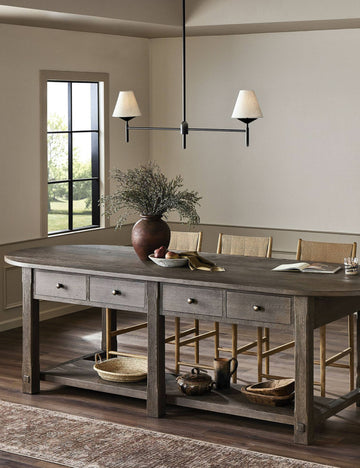
Clearance is just as important as length and depth. As a general guide, allow about 42 inches through an active work aisle for one cook and 48 inches where more than one person may be cooking. Standard walkways should remain at least 36 inches wide. These measurements help determine whether a large kitchen island will feel generous or simply oversized.
It can be helpful to use painter’s tape to mark the kitchen island’s dimensions on the floor before you commit. This makes it easier to see how the piece affects movement between the sink, range, refrigerator, and dining area. A large kitchen island works best when there is still enough room to open appliances fully and move comfortably around every side.
In a compact room, small kitchen islands with a narrow profile, open base, or a movable design can help keep the space dynamic. A freestanding kitchen island can add prep space and storage without the permanence or visual weight of built-in cabinetry. Other ideas for small kitchen islands include choosing a piece with open shelving or a lighter silhouette that keeps the room feeling balanced.
What Countertop Materials Are Best for a Kitchen Island?
The best countertop material depends on how you plan to use the surface and how much care you want to commit to. A butcher block kitchen island brings a warm and rustic quality to the room, making it a natural fit for spaces with wood cabinetry, traditional details, or a layered mix of finishes. Because wood can show wear over time, review the care instructions before using the top as a cutting surface.
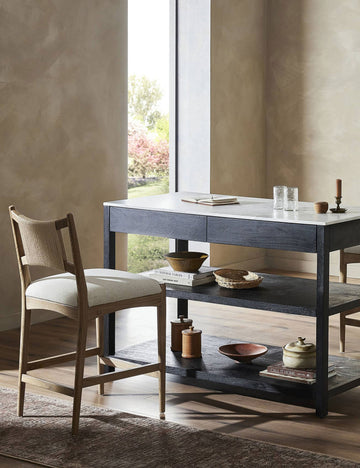
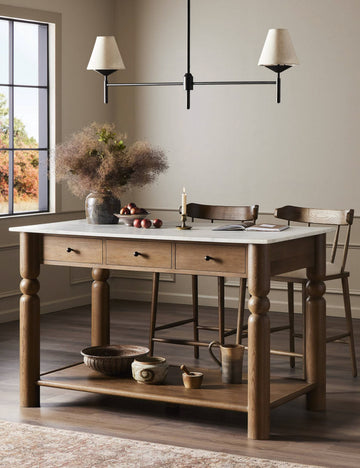
A marble top kitchen island offers a cooler, more polished look. Natural veining gives every piece a distinctive character, while the stone creates contrast against wood cabinetry and softer textures. Marble can be sensitive to staining, scratching, and acidic ingredients, so boards, trivets, and coasters can help protect the finish.
Other options can bring yet more qualities but the note to remember is to think about how the material works in the space, both practically and as a prominent texture in your design. For a more relaxed, utilitarian feel, a butcher block kitchen island may be the stronger choice. For a more refined focal point, a marble top kitchen island can bring lasting depth and character to the kitchen.
Should I Choose Seating, Storage, or Both?
Think about what your kitchen needs most. A kitchen island with storage can add drawers, shelves, or enclosed cabinets for cookware, linens, serving pieces, and pantry staples. Open storage keeps frequently used objects within reach, while closed cabinetry creates a cleaner more stately look.
A kitchen island with seating introduces an informal place for breakfast, homework, or conversation while meals are being prepared. Make sure there is enough room to pull stools out comfortably and move behind them without interrupting the flow of the room.
In a larger kitchen, one piece can often handle both functions. A kitchen island with storage on the working side and seating along the outer edge keeps practical needs close to the cook while opening the other side to guests. A kitchen island with seating also helps connect the kitchen to an adjoining dining or living area.
For a more casual dining setup, you might consider a kitchen island with breakfast bar seating. This layout works especially well in open-plan spaces where the island serves as both a work surface and a gathering point. When planning seating for a kitchen island with a breakfast bar, leave enough width for each person to sit comfortably rather than fitting in the maximum number of stools.
How To Style Your Kitchen Island
Think of the island as part work surface, part focal point. Keep the everyday setup edited with a low bowl, a vase of branches, or a tray for frequently used essentials. Leave a generous portion of the countertop open so the island remains ready for prep, serving, and impromptu gatherings.
Use lighting to define the zone from above. Pendant lights can reinforce the island’s length, introduce a contrasting material, and bring a more intimate scale to an open kitchen. Stools offer another opportunity to shape the look, especially when their finish connects subtly to nearby hardware or dining furniture.
A freestanding kitchen island can make a newer kitchen feel more collected, particularly when its finish differs from the surrounding cabinetry. You can style open shelves with useful objects such as stacked bowls, appliances, or a small group of cookbooks.
However you style it, your kitchen island allows you the flexibility to showcase the nuances of your design aesthetic. From a compact worktable to a statement piece designed for storage and gathering, the right island can bring a new rhythm and purpose to the room.
When you shop kitchen islands at Lulu and Georgia, you’ll find pieces that balance refined materials and distinctive design with a practical edge. No matter what you’re looking for, we have a selection that offers a wide range of options. Check out our design services for more help on turning your place into a space you love.
Show Less